TL;DR: Flood damage comes from external rising water, storm surge, overflowing rivers, heavy rain overwhelming drainage. Water damage comes from an internal source, a burst pipe, a leaking appliance, a failed water heater. The distinction matters because homeowners insurance covers most internal water damage but almost never covers flooding. Remediation also differs: floodwater is typically Category 3 (contaminated), which requires more aggressive cleanup than a clean-water pipe leak.
If you’re standing in a wet house right now trying to figure out what happened, the answer shapes everything: which insurance policy applies, what the cleanup involves, and how long it takes. These two terms get used interchangeably in casual conversation, but in the restoration industry and in your insurance policy, they mean very different things.
Is Flood Damage the Same as Water Damage?
No. Flood damage and water damage are legally and technically distinct categories. Flood damage is caused by water that originates outside your home and rises from the ground up, storm surge, overflowing creeks, heavy rain that overwhelms storm drains, or a mudslide carrying water into your foundation. Water damage is caused by water that originates inside your home, a pipe that burst, a washing machine hose that failed, a roof leak that let rain in.
The National Flood Insurance Program (NFIP), administered by FEMA, defines a flood as “a general and temporary condition of partial or complete inundation of two or more acres of normally dry land area or of two or more properties.” That definition is why your standard homeowners policy doesn’t cover it, flooding is a separate peril that requires a separate policy.
The practical test: did the water come from the sky or the ground and rise up, or did it come from a plumbing or mechanical failure inside the structure? That answer determines which coverage applies and how the remediation crew approaches the job.
What Counts as Flood Damage?
Flood damage is water that entered your home because of an external weather or hydrological event. Common examples include storm surge from a coastal event, a creek or river that overflowed its banks, a storm drain that backed up and pushed water through your foundation, or a mudslide that carried water into your crawl space.
A few things that people assume are “floods” but are not, under insurance definitions:
- A pipe that burst during a freeze: this is internal water damage, not a flood
- A roof that leaked during heavy rain: typically treated as water damage from a sudden event
- A sewer line that backed up: this is usually a separate endorsement category called “sewer backup”, neither standard flood nor standard water damage coverage
In Southern California, flash flooding is the most common flood scenario. A heavy rain event, especially after a dry season when the ground can’t absorb water quickly, can push water into homes that have never flooded before. Hillside properties and homes near arroyos in communities like Escondido and El Cajon are particularly exposed during atmospheric river events.
Flood damage almost always involves Category 3 water, also called black water, under the IICRC S500 Standard. Category 3 water is grossly contaminated, it may carry sewage, agricultural runoff, chemicals, or biological material. That contamination level drives the remediation protocol: more PPE, more aggressive removal of porous materials, antimicrobial treatment, and stricter documentation.
What Counts as Water Damage?
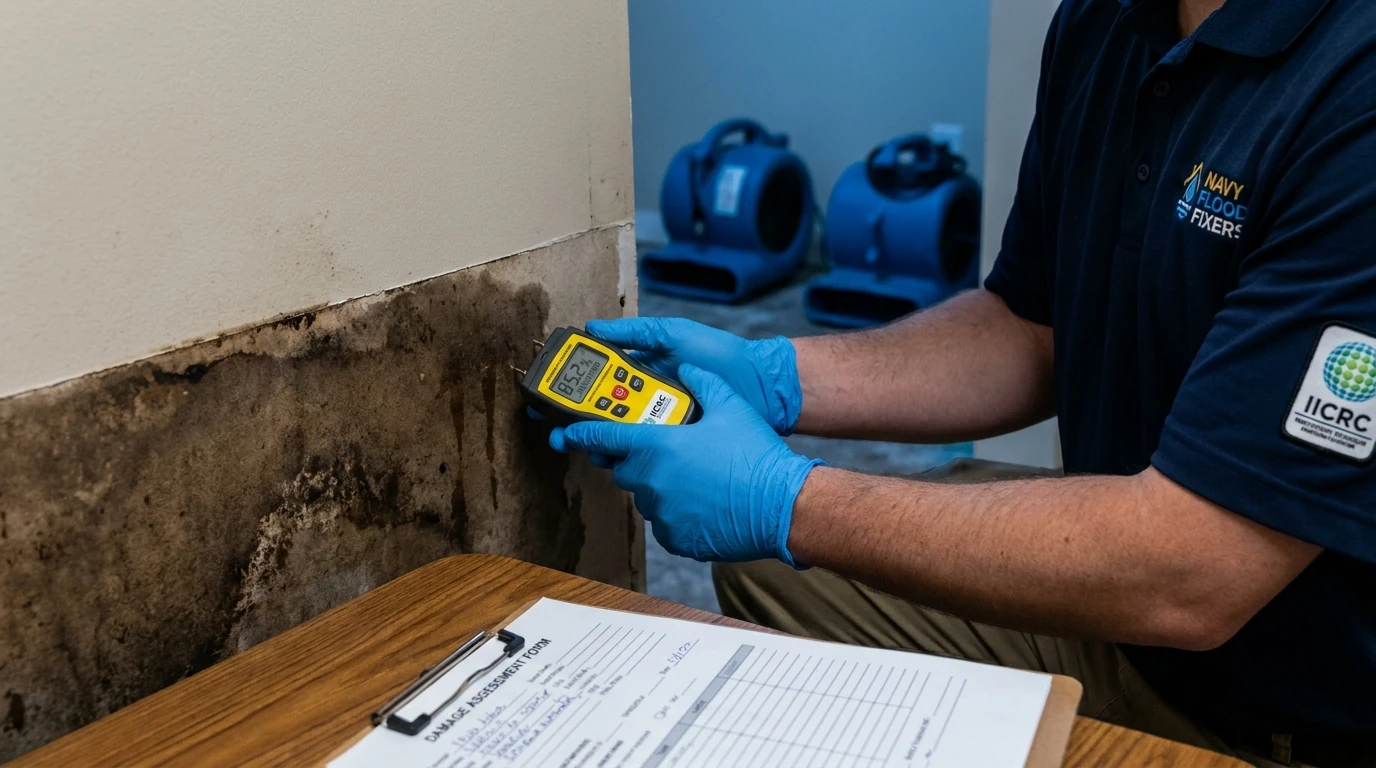
Water damage from an internal source is classified by the IICRC S500 on a scale of Category 1 through 3, based on contamination level, and Class 1 through 4, based on the extent of saturation.
Category 1 water (clean water) comes from a supply line, a toilet tank, or a drinking-water pipe. A burst pipe under the kitchen sink is Category 1. Category 2 water (gray water) contains some contamination, a washing machine overflow or a dishwasher leak falls here. Category 3 water can also occur from internal sources: a sewage backup or a toilet overflow involving fecal matter.
The category matters because it determines how much material has to come out. Category 1 water in drywall can sometimes be dried in place. Category 3 water in drywall almost always requires removal, regardless of whether the source was a flood or a backed-up drain.
For a deeper look at how Category 3 water changes the remediation process, see our post on what Category 3 water damage actually involves.
Class (1 through 4) describes how far the water spread and how deeply it saturated materials. A Class 1 loss is a small area with minimal absorption. A Class 4 loss involves deeply saturated materials like hardwood subfloor, concrete, or plaster that require specialty drying equipment.
Why Does Flood Damage Cost More to Restore?
Flood damage typically costs more than equivalent internal water damage for three reasons: contamination level, scope, and insurance friction.
Contamination. Floodwater is almost always Category 3. That means more materials must be removed rather than dried, more antimicrobial treatment is required, and the crew needs more PPE. Drywall, insulation, and flooring that could potentially be saved in a clean-water loss often cannot be saved in a flood loss.
Scope. Flooding tends to affect larger areas. A burst pipe under a sink might saturate 200 square feet. A flash flood that enters a home can saturate the entire ground floor, including wall cavities, subfloor, and HVAC systems. More affected area means more equipment, more labor, and more time.
Insurance friction. Standard homeowners insurance does not cover flood damage. NFIP flood policies and private flood policies have separate claims processes, separate adjusters, and separate coverage limits. Navigating two policies, or discovering you have no flood coverage at all, adds time and stress to an already difficult situation. Our post on whether homeowners insurance covers flood damage breaks down the coverage gap in detail.
For internal water damage, most standard homeowners policies cover sudden and accidental losses, a burst pipe, an appliance failure, but exclude gradual leaks. See our guide on homeowners insurance and water damage coverage for the full picture.
What Should You Do First?
If you have standing water in your home right now, the source matters for your next steps, but the immediate actions are the same: stop the water if you can, document everything with photos and video before anything is moved or dried, and call a restoration company before you call your insurance company.
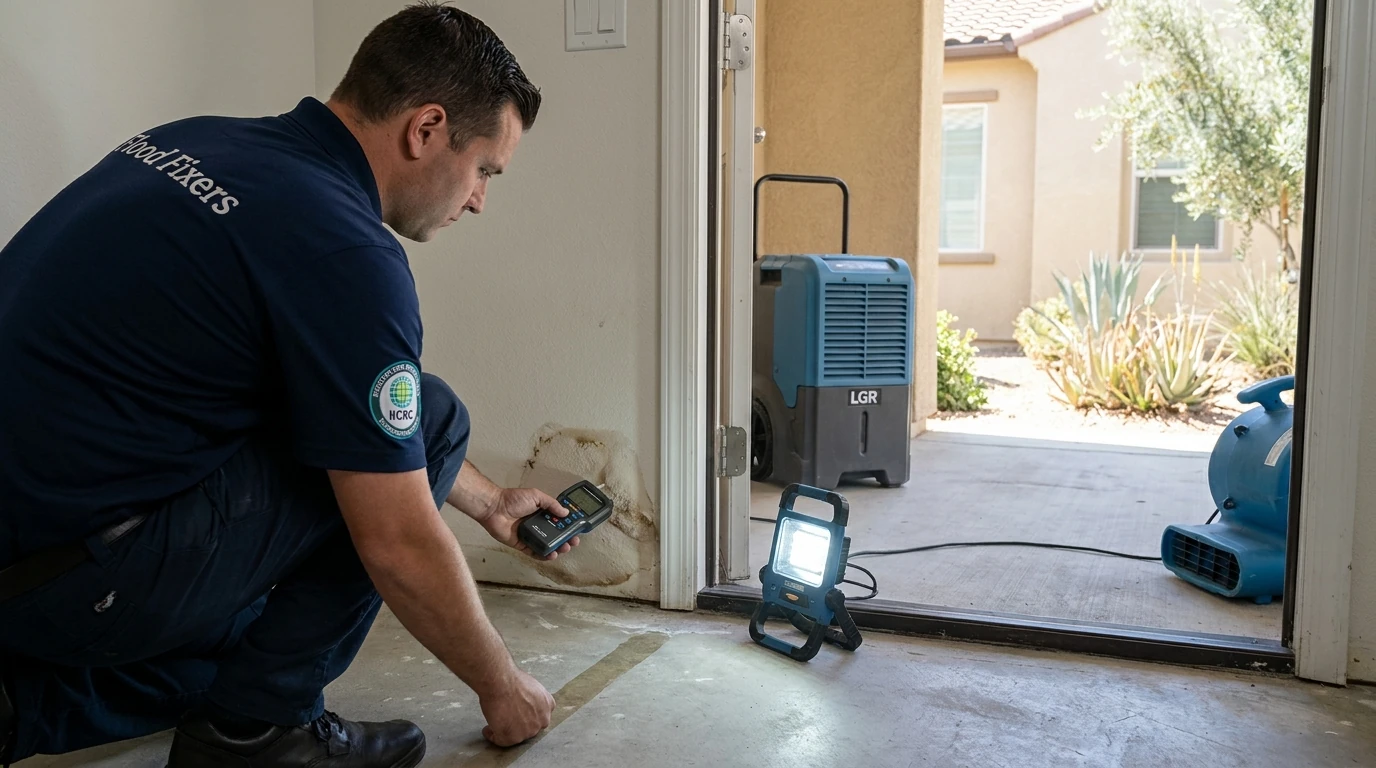
Restoration crews can identify the water source, classify the contamination level, and begin extraction and drying. That documentation, moisture readings, photos, a written scope of work, is what protects your insurance claim, whether it’s a water damage claim or a flood claim.
For a step-by-step guide to the first 24 hours, see what to do after a flood in your house and what to do in the first 24 hours after water damage.
Flood Fixers handles both flood damage restoration and water damage restoration across San Diego County, 24 hours a day. If you’re not sure which category your situation falls into, call (855) 204-1124 and a technician can help you figure it out.
About Flood Fixers
Flood Fixers is an IICRC-certified, EPA Lead-Safe Certified restoration company serving San Diego and surrounding communities including Chula Vista, Escondido, Carlsbad, El Cajon, and Oceanside. Licensed and insured, they provide 24/7 emergency response for water damage restoration, flood damage restoration, burst pipe repair, basement flooding cleanup, and reconstruction. Flood Fixers handles the documentation and scope-of-work process that insurance adjusters require, helping homeowners navigate claims from the first call through project completion.